The Website Mistakes Killing Your ROAS (And How To Fix Them)







In this episode of Digital Marketing Stories Jim Banks sits down with Ivan Janku for an honest chat about running an agency, surviving in the ever-changing marketing world, and the real challenges behind the scenes.
If you want a peek into what it truly takes to make it in digital marketing, you don’t want to miss this episode.
I have one small favour to ask.
Would you please follow the show wherever you listen to podcasts.
Your support helps inspire me to get more guests to come and share their stories.
Just search for Digital Marketing Stories
Important Notes
This is Digital Marketing Stories on Bad Decisions with Jim Banks, the weekly podcast for digital marketers who want to learn from the best.
New episodes are released every Wednesday at 2PM GMT where you'll get digital marketing stories and anecdotes along with bad decisions and success stories from digital marketing guests who've been there and done that in many of the disciplines that make up the discipline of digital marketing.
The podcast is powered by Captivate and all the ums, and ers have been removed using Descript to make your listening more enjoyable.
Some of the snappy titles, introductions, transcripts were created using AI Magic via Castmagic
Disclaimer: some of the links on the show notes of my podcast are affiliate links.
If you click and buy from any of these links, I may receive a commission as a result of your action.
00:00 - Introduction and Guest Welcome
00:33 - Discussing the Weather
00:42 - Market Shifts and Consumer Behavior
00:55 - Ivan's Journey into Digital Marketing
02:05 - Challenges in Digital Marketing
04:47 - Social Media Strategy
06:22 - Agency Collaboration and Industry Standards
09:01 - Client Auditing and Trust Building
13:35 - Importance of Accurate Tracking
14:56 - Gear Talk and Content Quality
17:12 - Challenges of Inventory Management
19:29 - Effective Marketing Strategies
20:47 - Importance of Data and Tracking
29:30 - AI in Marketing and Advertising
34:16 - Concluding Thoughts and Future Plans
Jim Banks [00:00:00]:
Hello everyone and welcome to this episode of Digital Marketing Stories. I'm joined today by Ivan Janku. I believe that's how you pronounce your name. I always invite people on and I seem to have a habit of butchering people's names, but I figured yours is easy to say but you never know. Right? Did I get it right?
Ivan Janku [00:00:16]:
Thank you, Jim. Yeah, it was close enough. Even young coup. But I had a lot of other versions, especially with the US and clients that we had. Some pronunciations were just comical. Yeah, good enough.
Jim Banks [00:00:28]:
And where are you joining us from today?
Ivan Janku [00:00:30]:
I'm located in Serbia right now.
Jim Banks [00:00:32]:
Nice, nice. And how's the weather in Serbia?
Ivan Janku [00:00:35]:
Catastrophic. Almost British.
Jim Banks [00:00:37]:
Oh, really? Yeah, the Brits have a renowned for our horrible weather and we've certainly lived up to it. This year it's been, we've had hose pipe bands in the summer and now we're having flood warnings. So it's kind of like, come on guys, make up your mind.
Ivan Janku [00:00:48]:
Yeah, I wouldn't like that. For us it's just like cold drizzle and yeah, pure depression.
Jim Banks [00:00:54]:
But anyway, we're not here to talk about the weather, we're here to talk about digital marketing. So tell us a little bit about your background. What's your, what's your kind of story in terms of how you got into digital marketing?
Ivan Janku [00:01:03]:
So when I was like 20, I started doing this marketing or upwork and quite fast they started getting more than enough work than I could handle. So I started trying to build a team and that was like nine years ago. So next year, the agency I have called Digital rocket is turning 10.
Jim Banks [00:01:21]:
Congratulations in advance.
Ivan Janku [00:01:23]:
Thank you very much. And you can imagine 10 years of surviving as a business was full of different stories.
Jim Banks [00:01:28]:
Yeah, it's funny, I always say to people, there's one thing you cannot, you can fake many things, right. Especially now with AI, it's so easy to fake so many different things. But the one thing you can't fake is longevity. I think if you've done something for a long period of time, then you're either really rich and you've got tons of money to be able to sustain it, or you're really good at what you do to be able to sustain it that way. So again, 10 years is, is. Is for me. I always look at it and anyone that's achieved 10 years is, has done incredibly well. So congratulations.
Ivan Janku [00:01:57]:
Thank you very much.
Jim Banks [00:01:58]:
So you started off like a, I believe as a sort of freelancer contractor, as most people do, and now you've grown to a reasonably sized Business. I mean, tell us a little bit about the kind of, the pain of going through that, that journey to go from being on your own to. To where you are now.
Ivan Janku [00:02:12]:
So as a business decision, starting a digital marketing agency could be one of the worst decisions a person can make. Mainly changing from multiple different directions. If you decide to build something, do something, like you can streamline it and it's done while in digital marketing, it keeps changing, so you have to change everything every three to six months. So that's one of the biggest issues that it took a lot of time for me to actually figure stuff out to get to a point of knowledge where I can build a team that can push out really good value. The first issue when we started was just generally that nobody ran, we just did ads, nobody actually did creative nothing. That was like 2016, you can imagine, like it was a completely different scenario where the expectations and what we've done as a, as a scope of work was completely different. But now as things are changing, the scope of work is actually becoming different. Where we're now developing the website and writing the copy and stuff like that, plus also developing the creators for the ads.
Ivan Janku [00:03:08]:
So just complete control and expansion compared to where you were before in 2016, where you can just launch some ads and it's going to work.
Jim Banks [00:03:16]:
Yeah. Because I've always said the challenge is like, as much as I'm like you, I run an agency and I mean, I also, I also run a consultancy, so I call it a consultancy. And what I found is that like, generally speaking, I've always said to all the clients I work with that paid media or media buying or whatever, whatever it is, it's not like a magic wand. Right. You still need to have good product, good, good website, good kind of offer in order to get people over the line. Right. And quite often we spend a lot more time on the front end with website landing pages, that type of stuff. And I do it primarily.
Jim Banks [00:03:50]:
I'm being selfish. I just want to make the media buying side of things really easy.
Ivan Janku [00:03:54]:
Exactly.
Jim Banks [00:03:55]:
Because we're the best winner in the world. You can have the best skills, tactics and everything else. Best ad copy. Right. But if the actual landing page is horrible, the product overpriced or whatever it might be, customer service is bad, reviews are bad. Right. Then really you're setting yourself up as an agency owner for a full. Right.
Jim Banks [00:04:11]:
And you're not really doing the client any favors by spending their money on ads. Right. Because it's just not going to work.
Ivan Janku [00:04:16]:
I agree 100% and for us, it is a deal breaker when we sometimes have a person that's like, my website is good enough, I just want you to run my ads. It's not good enough. We cannot build like a constant like stream of data that we can rely on. Who knows what's going to happen. I just cannot like invest that amount of time to somebody that doesn't want to listen to reason. So 100% like it's. The game is completely shifting. There's no more forgiveness.
Ivan Janku [00:04:40]:
Everybody got burned online multiple times. So everybody expects a lot more. And yeah, it's changed forever.
Jim Banks [00:04:48]:
So in, in terms of again, I mean I, I'd love to dive in a little bit because one of the things I again look when I, when I research guests that come onto the show, I look and see what their social profiles and exposure looks like. You've got a really, really good, professional looking kind of configuration for TikTok, Instagram, YouTube and so on. How much does that kind of feed into your like client acquisition strategy? Is that part of that or what is it, what is it that's behind your social media presence and the activity that you've got on those channels?
Ivan Janku [00:05:17]:
So right now we're just kind of playing around trying to figure out the voice. This year we spent it on developing better internal systems, developing better HR systems, because the whole plan is that this year coming up we will start expanding on a couple of different angles. Now if in residual you're asking me about how we're planning to develop the agency further, basically the goal for the next year is going to be to just launch a set of different campaigns where we're focusing on just completely turning things in reverse when it comes to the marketing space because most agencies just offer to book a call or stuff like that. While we developed a lot of different systems where we can audit and analyze the business before they even need to book a call with us so they exactly know where we can help, what we can help and stuff like that. And mainly it's because most business owners, especially ecom owners, got burned by like random agencies that were just trust me bro, techniques. And then when that doesn't work, like you lose money, you lose time, you lose ad spend, stuff like that. And you don't get that back. This system that we developed through the no waste audit is a thing that has just completely changed the game for us and we're planning to scale through that next year.
Jim Banks [00:06:22]:
Yes, it's funny, I mean like I always say, like I've run agencies for a long time similar to Yourself and people always go, how can you talk to your competitors? Right? Because I mean tall intentions, that's what we are, right? We're competitors to each other. But I've always maintained that the industry does better the more we collectively work together to ensure that the trust me bro, kind of agency owners don't have a seat at the table. And the people that are at the table, they're the ones that have earned that right by doing good work for clients and being trustworthy and honest and everything else. Right? Because it's so easy to, as you say, to set up an agency. I think I scoped it out. I mean probably for less than 200 bucks you can kind of be up and running and, and say I have a digital agency and there's nothing. And in the same way that, that if you're an advertiser advertising products that then you can get in trouble if you're making false claims. There doesn't seem to be any sort of penalties for agency owners basically bullshitting people saying we're doing this, we're doing this and they're really not doing any of that at all.
Jim Banks [00:07:20]:
And I just wondered what your thoughts were in terms of that, in terms of how, how you, whether it's a self policing kind of ecosystem or. Because, because for me is it. You could argue and say it's not for me to be critical of other agencies but at the same time I want to make sure that all the clients get good work done for them. And that means that the experience and expertise of the agencies that are providing that work is good. And it, it kills me when I hear some of the, the horror stories of what agencies have done for clients that they're running businesses with lots of people, lots of product, lots of money and it all goes, goes crazy bad for them because the agency just doesn't have the skill to do the job in general.
Ivan Janku [00:08:01]:
Like I'm not at all in a problem to be the bad guy and to just point out who needs to be out of the market, let's say. The main thing that I had as a bad experience is just that you can imagine we're looking in Eastern Europe. So most of the like logical business owner buying patterns is that they first try to find somebody they know or get recommended from person and like that doesn't work usually. Then they go online and try to find somebody that's more expensive then that doesn't work. And so they go through three or four local agencies and then basically when they're out of energy and money and Stuff like that, they encounter somebody like us that actually offers a lot more value for money plus is recommended from a lot of different sources. And then for us it's like going on a date with a girl that had 4 exes cheat on her, lie to her beat or whatever. So it's just a massive problem starting from building that relationship after they had so many failures. Like they're just already not ready to trust you, already expecting you to fuck them over in a way.
Ivan Janku [00:09:01]:
So that's one of the reasons why we focused on developing this auditing system where we're just like, here's everything we need to do, here's all of the changes that need to happen in the next three months, we explain everything and then basically we use that as a roadmap and we give guarantees based on that roadmap that we will do everything. And you can imagine like it's based on the work we found through the audit. So that's the only way that we found is like a simple transactional way of showing them everything and then guaranteeing the work based on the findings in their account. Everything else is just too much. Trust me bro, they're not sure what they're going to get. And the other problem is that most business owners don't have a clue what marketing is like. They don't differentiate between advertising, branding. It's just non stop the same story where the business owner is randomly hitting on people hoping that some somebody's gonna work out and they don't have the time actually go and learn everything because managing the production cycle, managing everything is a nightmare.
Jim Banks [00:09:55]:
Yeah, yeah. I mean I, I, I've always maintained if I get approached by somebody that wants to work with me again, it's, it's more of a, a process I go through. I've got a kind of a document where I'll go and look and see what their current exposure is on all the platforms again. I'll look and see where they've run ads. So I'll look at TikTok, Pinterest, Quora, Reddit, Meta, Microsoft, Google, Programmatic Display, go across the board and try and find what that company's done. Right. There's usually sort of telltale footprints as to whether they're doing well or not. Just again based on again history, like how long they've been doing it.
Jim Banks [00:10:29]:
If they've been advertising on say TikTok for 18 months, two years, three years or something like that, then you know that they've got sort of these skills to stay in the game. But you Know, quite often you might see people do small campaigns like don't really spend a lot of money and then go that didn't work, I'll go and do something else. And they've never, never really addressed the point, the problem area for them, which quite often is the website's too slow or whatever it might be. So what I typically do is I, before committing to work with somebody, I always say, let me, let me have a review of where you are. See, see where we go from. And quite often it'll get to the point where I'll say, look, I don't think we can work with you right now, but if you can go away and do these things, right, and quite often it's improve your, the process you've got for your website and everything else, then yeah, but by all means come back and we'll talk. And people sort of look at me quizzically and go, are you just like turning me away? I mean, but at the same time, like I said, I don't want to set myself and my agency up for a fall. I don't want to set them up for a fall because not a magic wand, we can't just create something out of nothing.
Jim Banks [00:11:32]:
If the, if the experience is going to be poor, then I don't really want that to be what they had and I want them to improve the experience again. Quite often it could be I need you to spend some money now to get a better website, better checkout process or whatever it might be. If it's lead gen, right? Maybe you invest in a CRM like a HubSpot or something like that to make it so that, you know, we've got a better than average chance of doing better than your competitors, right? Quite often it could be, we look at, we analyze a lot of the competitors in that particular space to see how they stack up against them. Right? Because quite often it might be that they're horrible, right? The client that wants to work with you is horrible, but everyone else is even worse, right. In which case you could probably still win it, right? But that doesn't necessarily happen.
Ivan Janku [00:12:16]:
The main thing that I noticed is that I tried doing that and that was our progress, how we did things about until 2019. And then when I talked to those people that they gave feedback, some of them went in, did the specifics but the problem is that the average developer just knows how to build a nice looking website. So you need to micromanage the whole process. And in general those people often leave some issues of leaves and bugs and then they're really hard to reach when something goes down. So for us it wasn't a solution that was good because we only corner ourselves to companies that had an internal web dev person or something like that. So by adding three or four additional people to do the web dev UX and just overall solve all of the issues that come up in the day to day, we managed to actually build a solution where if they have a problem with the website, we just quote them on exactly what they need to do, we can do that for them and it's just a much faster solution for the product, like an all inclusive service. And in general, again it's really hard for the business owner to connect the dots if they don't know everything. So you need to find an agency to do web dev, then another person to do tracking or hopefully you expect the web dev agency that doesn't run ads to do the ads tracking.
Ivan Janku [00:13:24]:
And a lot of agencies that don't have web dev really have issues setting up complex tracking systems because you do need some web dev for that. And then let's not talk about creatives and emails and stuff like that.
Jim Banks [00:13:35]:
Yeah, because I find with the tracking, I mean, like I've been running sort of TikTok ads for a client and like the data that's showing in the TikTok system is completely different than what's being shown on the sort of the client's side. Right. So if we're looking GA4 or lucky orange or whatever it might be, there's like there's just no correlation between the two sets of data. Right. So TikTok have got one way of reporting what they see and the client's got something else. And I've always maintained that the only thing that matters is how much money did you spend and how many leads or sales did you get.
Ivan Janku [00:14:05]:
Right.
Jim Banks [00:14:05]:
I mean that's it. Everything else that TikTok say has happened. Right. Doesn't really matter. It's the money that was spent by them and how much money was generated in revenue or how many leads came through and what's the CPA and is that within the sort of ballpark of what you want it to be? Right, but you know, but, and again, I like you, I've been sort of in the weeds on the tracking side of things because for me it's so important to have that accurate. Right. Because with the best one in the world there's so many other things like iOS 14.5 it's like really kill tracking in a lot of respects. Here in Europe you've Got the kind of GDPR which makes it probably one in every three people doesn't accept cookies.
Jim Banks [00:14:43]:
So therefore all of a sudden your experience is going to be pretty poor from. From that perspective. So these things are just sent to make things a little bit more challenging for you as part of that process. You have problems with your microphone.
Ivan Janku [00:14:56]:
I'm just trying to nudge it up above to be closer to my mouth here now. It's perfect.
Jim Banks [00:15:01]:
Yes. I always find with. With gear, it's like I spend so much time. I bought the. I think we've actually got exactly the same microphone Shure SM7B. Right. And for me it's. I bought it, actually.
Jim Banks [00:15:11]:
I think I bought it. Just not sure it was just before COVID or just during COVID when. When that sort of first happened because I spent so much time on the road traveling to conferences and speak and presenting and things like that. And all of a sudden I wasn't doing it right. And I'd watch people using the microphone thought, wow, that sounds really crisp and clear and everything else. So I went out and invested in it and it's just become like a. You know, spent so much money on gear and I think sometimes the gear doesn't matter. It's what the content is that matters, rather than the kind of gear that's used to make it.
Ivan Janku [00:15:41]:
I would say it's the same thing as for our digital marketing side. You can try talking to infinity, but if you're talking through a toaster, it's not going to work. Nobody's going to have the patience to listen to you. Same as like a website. So it's like a minimum requirement now that you have to achieve to be even, like have a chance to get through everything. So I think that everything now is dependent on a lot of preparation and some minimum quality you need to hit before you can actually start gaining traction.
Jim Banks [00:16:08]:
Yeah. Yeah. And that's. I guess that's probably the one area where I think the Trust me bro, agency owners can. Can actually do okay because I think a lot of them are very confident on camera. They look okay. And I think again now, I think a lot of people are using iPhone 17s and the microphone on there is pretty good. And everything else, it's just again, with AI, there's so much they can do to enhance the audio once the.
Jim Banks [00:16:29]:
Once the kind of recording is done. Right. There's so many things you can do to enhance the audio and make it better. So we're obviously kind of recording this just after sort of Black Friday, Cyber Monday. How was that for you this year?
Ivan Janku [00:16:42]:
This year was a bit different than the others. It's kind of like the buying patterns of people are changing more and more. They're more timid. We managed to hit a lot of results that we planned on, but it was kind of like different compared to prior years. It's more like people are still shell shocked with everything that's happening. So just pushing Black Friday suburban deals as we did before with a lot of ads and a lot of ad spend wasn't just enough. We had to do a lot more text message marketing to just build, to just push through the noise. And yeah, we're happy.
Ivan Janku [00:17:13]:
We even have some customers that are upset that we have too many sales and they can, they are now having issues fulfilling it.
Jim Banks [00:17:19]:
Yeah, that's always for me was the, the thing when, when, before Black Friday Cyber Monday came, when people would phone me up because we were running campaigns for Christmas and they would phone me up and say, jim, we've run out of product. And I would say to them, so exactly when did you know it was going to be Christmas? Because Christmas happens at the same time every year and on. So again, it's some. Sometimes people say that's a nice position to be in, but honestly it's not. I'd say it's worse to sell out than it is to not sell enough. Right. I think you can sell what you don't sell at Christmas or Black Friday Cyber Monday. You can sell it down the line.
Jim Banks [00:17:53]:
Right. But if you don't have the product at all, it's very difficult for you to, to continue to take sales. Right. Because if people come to you and you haven't got it, they're going to go somewhere else and buy it from somewhere else. And that person then becomes a customer of the other person, the other merchant, rather than kind of one of your clients.
Ivan Janku [00:18:10]:
Exactly. And the market just doesn't forgive and forget. Just in general, most of these clients that I'm referring now are people that build their own products. We actually had a lot of people that had really successful Etsy stores that reached out to us during 2018. And then a lot of these people are specifically building their own products and now are having issues building everything.
Jim Banks [00:18:30]:
But.
Ivan Janku [00:18:30]:
But at the same time, yeah, there's a lot of business owners. I'll give you an example where we were working with a brand that's focusing on clothing for baseball. And I told the guy, just by the structure, how his logistics look like his top selling products are gonna sell out so fast that that's gonna destroy the marketing efficiency ratio down the, down the line. And he didn't believe me because he never worked with an agency that actually knows what they're doing. But the moment we started figuring out like what products work and we started scaling up the ad spend, he like it. I told him you need 45 days, the maximum turnaround time for restocking that you need. And he, I have three months. And then we had two months without the best selling products.
Jim Banks [00:19:10]:
Yeah.
Ivan Janku [00:19:10]:
So that's like the common thing that the business owners don't understand is you don't need everything on stock. You just need the best things nonstop on stock, which is going to bring the people in. And then when you have that, you can scale that up. And same for Black Friday offers. Better having two or three really good offers than 50.
Jim Banks [00:19:27]:
Yeah, yeah. Because I've always maintained if you put all of your products into an advantage shopping campaign and let Facebook decide where the money goes. Right. I mean, ultimately the money gravitates to things very quickly. Right. So you could have a thousand products in a, in a campaign, but There could be three of them that actually consume 98 of the budget and the other 997 kind of products don't get a look at all any traffic. So for me it's, it's very important that you try and do that sort of segmentation to make sure that your, the products that you want to sell are the ones that again, just because it's popular doesn't necessarily mean that's the one you want to sell. Quite often it could be based upon product mar, profit margin and those are the sorts of things that need to be incorporated.
Jim Banks [00:20:13]:
I'm always amazed at how many people just blindly trust Google or Facebook to do all of the decision making for them. Right. Rather than them being in control of kind of the narrative in terms of what, what, what to sell, when to sell it and how it works out for them. Right. Because you give them an overall blanket. I want a 4x row as or a x roas or whatever it might be. Right. There could be some products even at 8x roas they could lose money on because it's the margins are so small.
Ivan Janku [00:20:39]:
Unfortunately, most of the money usually gravitates towards Zuckerberg. So it is a thing that most novice media buyers learn fast. For us, it's just in general, we continuously see people making basic mistakes that just completely destroy their whole account setup. Like just not using exclusions, not having tracking, like server side tracking. Since iOS 14.5 is just still A thing that most businesses don't know how to handle. And it's now you even have a two minute setup option for Shopify stores and stuff like that. So yeah, it's basically the start ceiling before what we just mentioned, even for the podcast industry, you need to have that minimum requirements built as a foundation before you can even think about building a successful business.
Jim Banks [00:21:21]:
Yeah, yeah. Because I think to your point about server side tracking, again, a lot of people have tried to do it, failed miserably doing it themselves, right. There are so many solutions out there. I mean, I use a solution called Elevar for Shopify merchants, right. So easy to set up. And then obviously every sale that gets generated, right. Server side kind of like can then get fed through to all of the platforms. If you're running on five or six platforms, they can share the data with all of those platforms.
Jim Banks [00:21:48]:
So all of the platforms have got the right information about what's actually been sold and everything else. Right. So because as much as, yes, Facebook want to know about what they sell, they should also know about what Google have sold and what other channels have sold, right? Because that's, that's ultimately the data that will populate your lists with audience data, right? So again, if you want to know who bought from, from Google, they should still go into the same exclusion list, right? If it's, if it's going to be a list of something that's a one off product and people aren't going to buy it again, right. Then you don't want to be, for them to be seeing your ads, right? You want them to not be seeing the ads. You want them to see something potentially different, right? So once you actually got them over the line, if they come back, say they go to Google, they type in your brand. If, if you know that they're existing customer, you should have a different experience, experience and journey for them based on the fact that this is somebody who's bought from you before. They shouldn't have a buy from me now. They should have a login to their site, leave me a review, engage with me socially.
Jim Banks [00:22:43]:
All those types of things should happen as part of that process rather than everything just become sell, sell, sell, right? I mean that's where you can build that relationship for the longer term. Really.
Ivan Janku [00:22:54]:
Yeah, exactly.
Jim Banks [00:22:55]:
Similarly, if, if a, if a brand has, has got the resource and it's pretty easy now with, with the vibe coding to, to have to build an app, even if it's a pwa, they can, they can build an app so that instead of people Having to go to Google to type in the brand, they can just open up their phone and go straight through to the the app and then that cuts out the middleman. Google then doesn't see the traffic they can go straight to on their phone. And I'm again, I'm amazed at how many brands still want to get involved in that auction process rather than trying to own the client themselves. And it just doesn't make any sense to me.
Ivan Janku [00:23:29]:
Yeah, for, for us it's just setting up the tracking systems has been a thing that's a massive priority. I mentioned that we've been talking to blottout quite a bit that we got a partnership with them now. And one of the things that is coming quite to revelation is that all of the data that we talked about, all of the GDPR rules, all of the things is fine. But in general, all of these platforms collect all of the data and never ever erase any of it. So that's one of the interesting things that we saw because when you start using additional tools that add additional data to your databases, like Blotout, you can actually first you get a lot more data that's matched with your backend, but on top of it, the whole algorithm is going to work better if it has a deeper database. So for me it's just understanding where the line is going to be drawn between what is okay and what's not from a data collection standpoint and what is going to be useful, what's not going to be useful and stuff like that. Because right now so much data and so many different data points that are being collected about every one of us, that is just insane. And it's becoming a burden because all of these algorithms now are becoming so good at understanding volume through LLMs that even now that even now with the new Andromeda algorithm, we see that you need to focus on giving it the right data, not just a ton of data that most people give if you want to actually get good results.
Ivan Janku [00:24:51]:
So if you get me, there's like a rubber band effect right now happening with I think with the Internet.
Jim Banks [00:24:56]:
Yeah, because I think, I mean, correct me if I'm wrong, but Andromeda is just Facebook's way of being able to cope with the kind of the proliferation of like multiple ads. Right. So do you have so many advertisers with so many elements of their ad creative kind of thrown into the mix? Right. So every. They always suggest you should have videos and images and five primary descriptions and everything else. And it's like all of a Sudden, instead of just having one ad, you've got like thousands of ads, right. And you multiply that by the number of advertisers that there are in the auctions and everything else. It's almost impossible for anyone to try and optimize their on their own to try and get to that point.
Jim Banks [00:25:38]:
I mean, I resisted a lot of the going down the route of giving 5 titles, 5 descriptions and all that, sort of. Because to me it's just they keep talking about it being banner fatigue. Right. And I'm thinking if I'm supposed to be showing my ads to new audiences, right, and I've got a 25 million audience sizes, pretty sure you could show them to a lot of people. Before we get to the point where everyone in the audience has seen the ads. Right. Clearly they're the ones that are actually creating that banner fatigue by showing the ads to the same people more frequently rather than just continuing to show it to new people.
Ivan Janku [00:26:12]:
Exactly. With Andromeda Update, I think it's a combination. One part of it is that they're retracting control and visibility for us as advertisers, while the other side, they claim that the algorithm is now better able to understand visual context. So not just the image or the video, but as well is what is in it. So the algorithm is going to contextually understand the creative on top of it. It's going to have a lot more data on the individual. So theoretically the algorithm is supposed to be able to understand you, your buying patterns, basically where you as an individual are in a, in a buyer's journey compared to where before you were part of a cohort of people and then you were all spliced in. And to me it makes a lot of sense what they're saying.
Ivan Janku [00:26:55]:
I just don't know exactly how they're going to do it. And you can see that there's a combination there where the advantage plus is like a hybrid of the normal ADS plus dynamic prototads and a couple of other versions of algorithms that spliced into one super algorithm. But the problem with the super algorithm is that it requires a lot more resources, necessarily a lot more data with a lot more ad spend. So most of the audits we've done in the last couple of months where people were like, oh, we can do 50 creatives were just people that just smacked 50 catalog images or just random creatives and they're later asking why it doesn't work. In my opinion, for especially the Andromed update, you need to have enough knowledge to build out what we call a marketing core, where it's basically a couple of different audience and a couple of different ads that you verified are working well. And then if you spin it off from that, it makes a lot of sense and you're able to use the Andromeda update properly. But for most that are not, even for most that don't know even how to just set up the basic campaigns, using the Andromeda is going to be ten times worse.
Jim Banks [00:28:00]:
Yeah, yeah, I think I, the thing I, again, I struggle with sometimes is that if you're working, I mean, I work with clients that sell a very specific niche product and the audience is very, very clearly defined. And you. I always feel like even though we know that that's what the audience is. Right. I always feel like Facebook meta punish advertisers who want to be specific and say I only want to target women above the age of say 40 or something like that, because I know that that's my audience. Right. And Facebook goes, no, you should kind of go broad. You should run it to men and women and people that are 18 and people 80 and everything else.
Jim Banks [00:28:36]:
But you know, the data doesn't back up the fact that the audience that we know buys, buys the product. Right. Are in that sort of 40 to 55 kind of age group. Right. And they're women. And it's like, why would I need to go out beyond that? And it's. For me, I've always kind of ended up in this sort of mutual hate, hate relationship with, with the platforms. Right.
Jim Banks [00:28:56]:
And having arguments with an algorithm. Right. I'm thinking this is crazy. I mean, but at the same time it's. I, I have had to acknowledge and embrace some of the, the evolutions of the algorithms, the way they introduce things. Right. Because as you say, they know a lot more about the, the people behind the devices than we do. Right.
Jim Banks [00:29:16]:
And I knew the interactions they've had with my client and the client site. Right. I don't necessarily know all the things that preceded it. Right. What happened before they got to the point where they clicked on my ad or my ad was shown and they, they clicked through from there. Really?
Ivan Janku [00:29:29]:
Yeah.
Jim Banks [00:29:30]:
So in terms of like next steps for you, I mean, what, what are the things you're excited about in terms of 2026 coming up? What are you excited about in terms of media buying and advertising generally?
Ivan Janku [00:29:41]:
I think there's going to be a lot of shifts mainly with the buying patterns of people with user generated content. I think that now we're getting into a moment where AI video is going to. And I just see that more and more brands are just trying to build a lot of UGC creators through AI and stuff like that. And in general I think that there's going to be again of a kind of retraction of the market towards buying random AI stuff and just trying to make everything sound futuristic because in the last couple of years anything that was perceived as AI is now bad. It doesn't work, it's not as good as it, you expect it to be. Most of the tools they bought through AI didn't do what they said. And that besides that for the average user when you say like an AI agency it basically means I'm not doing anything, I'm letting artificial intelligence do it instead of me. And for the user, the other side, it's more of a risk factor than a benefit.
Ivan Janku [00:30:34]:
And I still see like knowledge business owners without any lack of experience going to say oh we're an AI driven or AI based or whatever. And I'm like, I would shut the fuck up about that.
Jim Banks [00:30:43]:
Yeah, it's funny, I'm not by any stretch of the imagination an AI expert but I know a lot of people that kind of profess to be AI experts. And so again some of the stuff that they've, they've produced is cool. Right? But, but at the same time I always think for me some whatever it is you're doing. Right. Has got to pass the so what test. And when you, there was this phase where they had the, the little kind of capsule with a person in it and I'm thinking so where is so what, I mean what difference does that make? To me it's sort of again, I think with, with, with AI, the, the, the fact that people are claiming that something is user generated content, when users have never been near the product, never don't know the product, they're making false claims about the product. Right. Because it's a script that's been written by an agency or something like that.
Jim Banks [00:31:30]:
To me again it's just, that's false advertising in some respects. Right? They're advertising this, this product will do this, it'll give you a six pack and it's no, the AI has given the person the six pack. It's not the product. Right. And yeah, I mean to me it's just, I think at some point in time I think there's going to be a reset. I don't think AI is going to go away. I just think there's going to be a reset. I think the market is too big Now.
Jim Banks [00:31:52]:
Right. There's too much money in it. And at some point in time the investors in AI are going to start going, when do I get some money back from this? Because they can't just keep investing forever. Right. They've got to, to get to the point where there'll be a kind of a return. And I just think that there's going to be a reset, there's going to be a change in market position. I think the fact that Google got Gemini, I think that's probably great for them. Right.
Jim Banks [00:32:12]:
I know a lot of people are using Gemini now.
Ivan Janku [00:32:14]:
Yeah.
Jim Banks [00:32:15]:
When it first came out, like, I thought, okay, they're a bit slow to come out, but I think they've definitely put their foot on the gas and got to the point where they're actually doing pretty well now. I think there's going to be some casualties along the way. I don't know what those are going to look like because I think a lot of people are using AI because it's free. But at some point in time, in the very near future, if not now, there's going to be ads in there and it's going to. Again, people start going to start being offended by the fact that the experience for using an AI has not worked for them because they've had to watch 3 minutes, 5 minutes of ads for every couple of queries that they do.
Ivan Janku [00:32:49]:
Yeah. So when it comes to just general how people react to AI videos and everything, in 2015, 16, when I started just working I white label for a lot of ALI agencies. And so you can imagine that that was the moment where the 3D videos, Pixar movies and stuff like that started going down. So we worked with a company called thunderworks and we were selling something called Thunder Shirt. And I think it's still selling. But even back then we were telling them, don't use a 3D animated dog because they were using it successfully on TV. But then when we tried to transition those ads onto social, people just felt like we were lying. Like, why would you use a 3D animated dog if your product actually works?
Jim Banks [00:33:30]:
Yeah.
Ivan Janku [00:33:31]:
On TV, for some reason people generally didn't ask that. But we ended up just having a massive problem where the business owner was like, if this works on ads on tv, it must work on social. And I'm like, doesn't have any logic.
Jim Banks [00:33:43]:
Behind what you're saying, is you have an ad and then within the ad that people have the ability to be able to like it, dislike it, comment on it, share it with people in a negative way. Because people go inside a thousand shares. Yeah, but it could be a thousand shares and people are complaining about how bad this product is. Whatever you do, don't use this product. Sentiment analysis has got to be part of what you do. Right. It's not just a case of looking at what, what's actually happened. Right.
Jim Banks [00:34:08]:
So There may be 5,000 engagements, but if three quarters of those are actually negative engagements, people don't like it, that's definitely going to be harmful. So this has been a phenomenal conversation. Unfortunately. I got to go. I've got to go and pick up my grandkids from school. So I'm going to obviously thank you for being a fantastic guest on the show. Like all of you, all of your contact details will be available on the show notes afterwards. Just remains for me to say thanks you so much for being such a fantastic guest.
Jim Banks [00:34:34]:
And at some point in time I hope we get get the opportunity to meet in person maybe again if you do travel to shows or anything like that. But again, I'm sort of, I'm trying to get myself back out more into the sort of speaker circuit and more conferences and hopefully if you get get the opportunity to go to any of those, that'd be good to meet up and have a drink someday.
Ivan Janku [00:34:52]:
Sounds good. I'm thinking about starting to do something like that, so I'll hit you up on that.
Jim Banks [00:34:57]:
Cool. Good stuff. Anyway, thanks a lot again for being such a great guest and I'll talk to you on the next episode of Digital Marketing Stories. Thanks a lot.
Ivan Janku [00:35:05]:
Awesome. Thank you very much.

Podcast Host
Jim is the CEO of performance-based digital marketing agency Spades Media.
He is also the founder of Elite Media Buyers a 5000 person Facebook Group of Elite Media Buyers.
He is the host of the leading digital marketing podcast Digital Marketing Stories.
Jim is joined by great guests there are some great stories of success and solid life and business lessons.
CEO
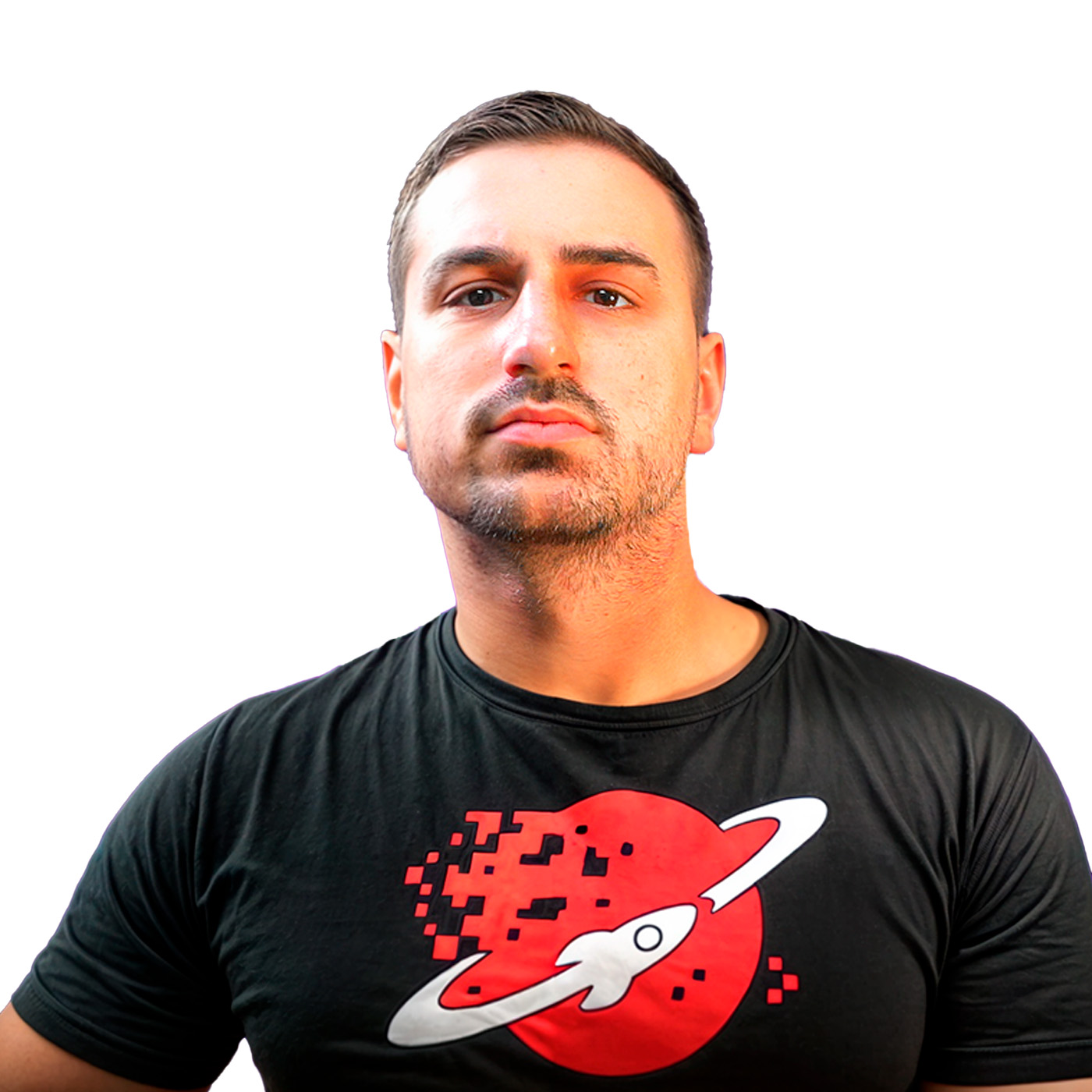
Ivan Janq is the CEO of Digital Rocket, a performance-first marketing agency that has managed over $80M in ad spend (including $16M+ in Facebook Ads in the last 12 months), generated $250M+ in client sales, and produced 257,000+ qualified leads across e-commerce, SaaS, and service businesses.
He started as a freelancer running ads worldwide, witnessing firsthand why most agencies fail their clients.
Frustrated with the industry's lack of accountability, he built Digital Rocket to do the opposite: cut the fluff, show the math, and deliver real growth.
What began as one person behind a laptop has grown into a team of 20+ media buyers, strategists, and creatives managing accounts using Digital Rocket's proprietary e-commerce PHASE system—a three-stage growth framework proven across cosmetics, self-care, fitness, beauty, jewelry, fashion, food, and supplement brands.